A small telescope connected to a laptop, or a smart telescope which contains its own computer, can be set up after astronomical twilight and run all night to record the details of stars or asteroids. The results can then be analysed to measure the period of variable stars or the orbit or rotation rate of asteroids. These results were gathered using a Seestar S50 smart telescope.
Send email inquiries about material on this page to astronomy@meldrum.nz 
Changing Brightness of Variable Star HD 116994
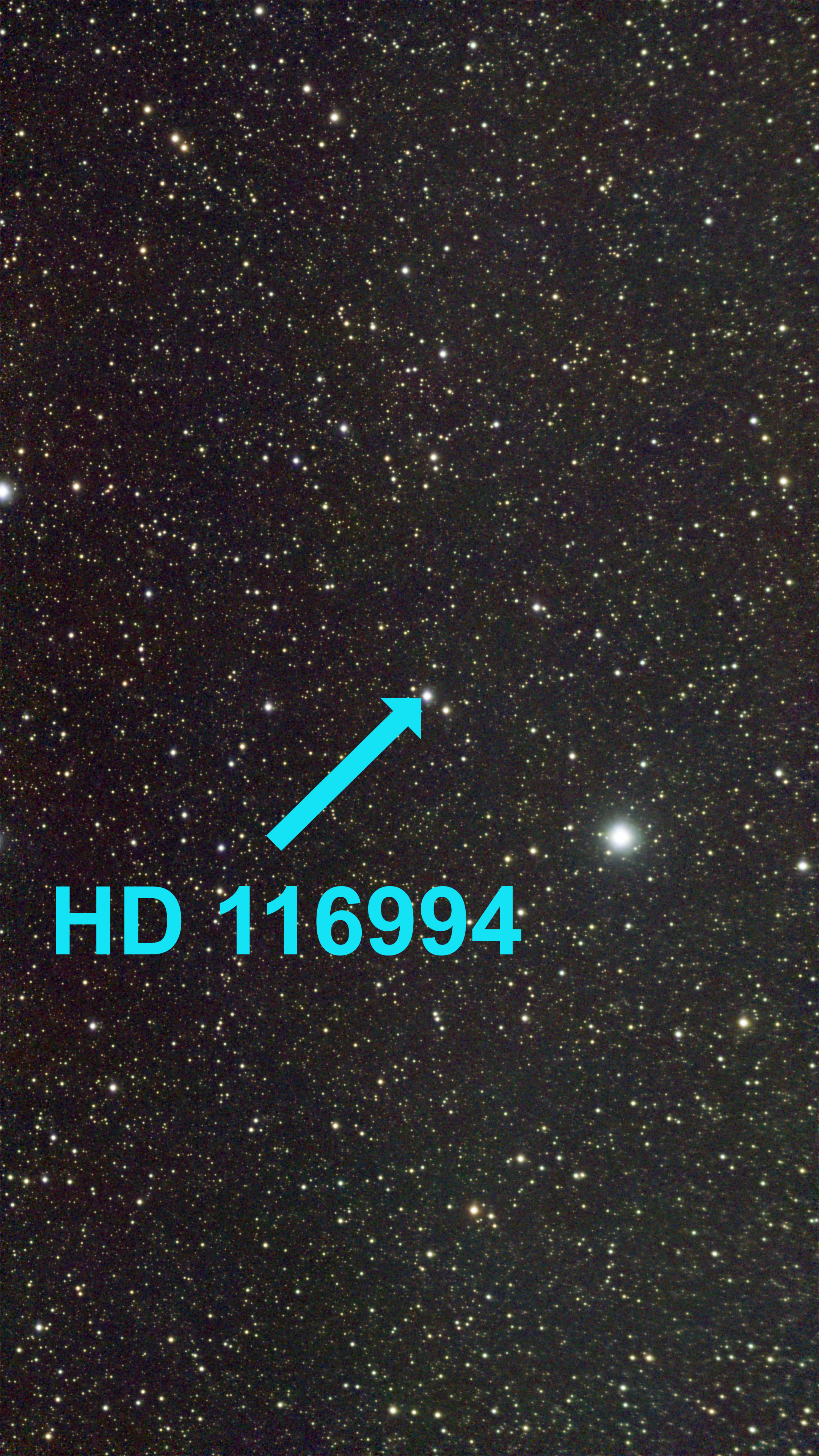 |
The star HD 116994 is a Delta Scuti variable star in the constellation Centaurus, close to the Southern Cross. It is a short-period pulsating star. The visual magnitude fluctuates rapidly from 8.57 to 8.82. |
The star's outer layers are drawn in by the gravity of the star and the helium within them becomes doubly ionised, thus more opaque. This blocks the flow of radiation from within the star. The resulting buildup of heat and radiative pressure pushes the outer layers out, overcoming gravity, so the star enlarges. The gas expands as pushed out and cools down so more light can escape from the star (at its brightest). Deprived of pressure support the outer layers are pulled back in by gravity, restarting the cycle.
These results were made on the night of 3 April 2026. Towards dawn clouds came in and along with the light pollution of the city caused unstable measurements, as the graph shows.
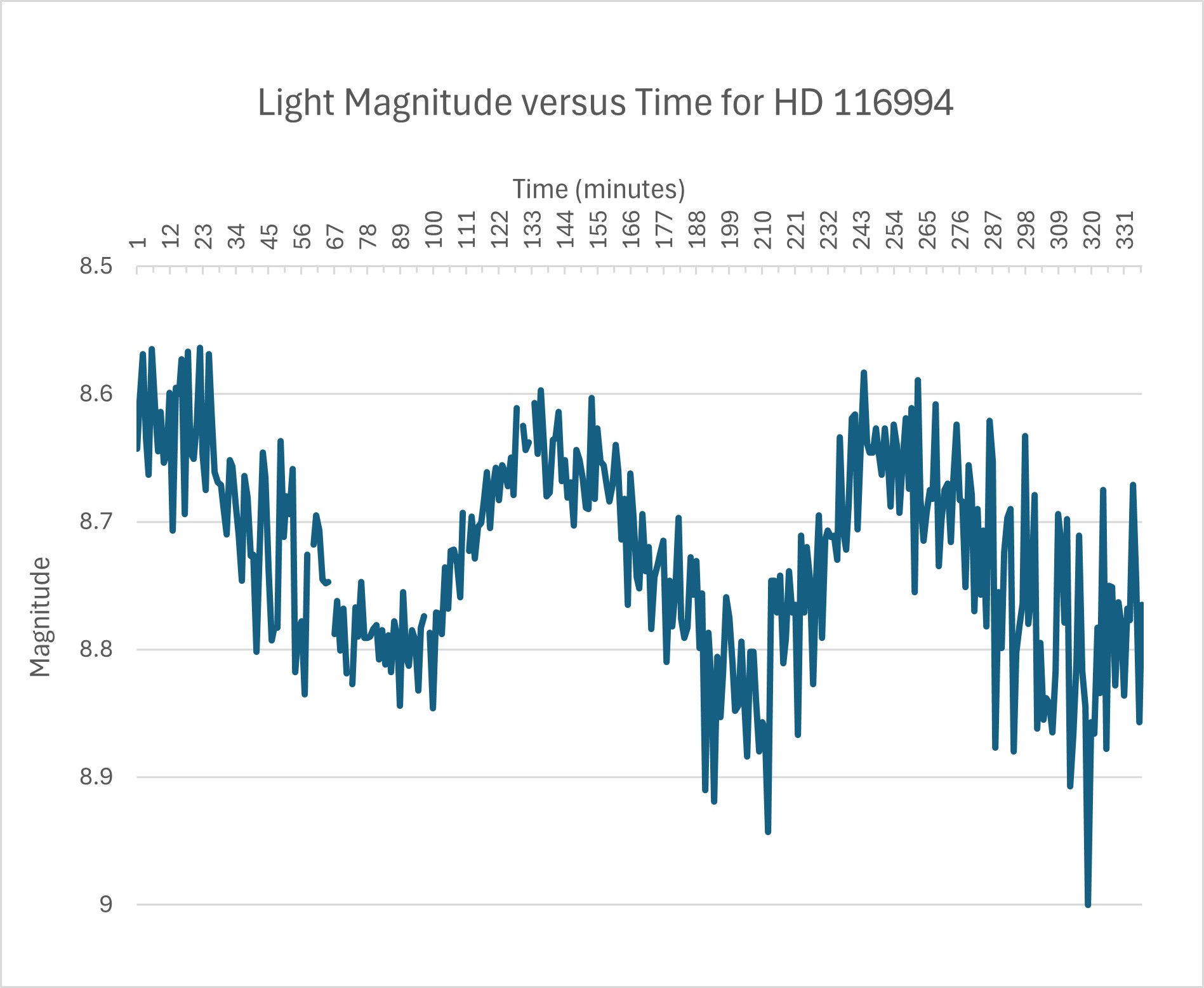
The graph indicates a period of about 130 minutes.